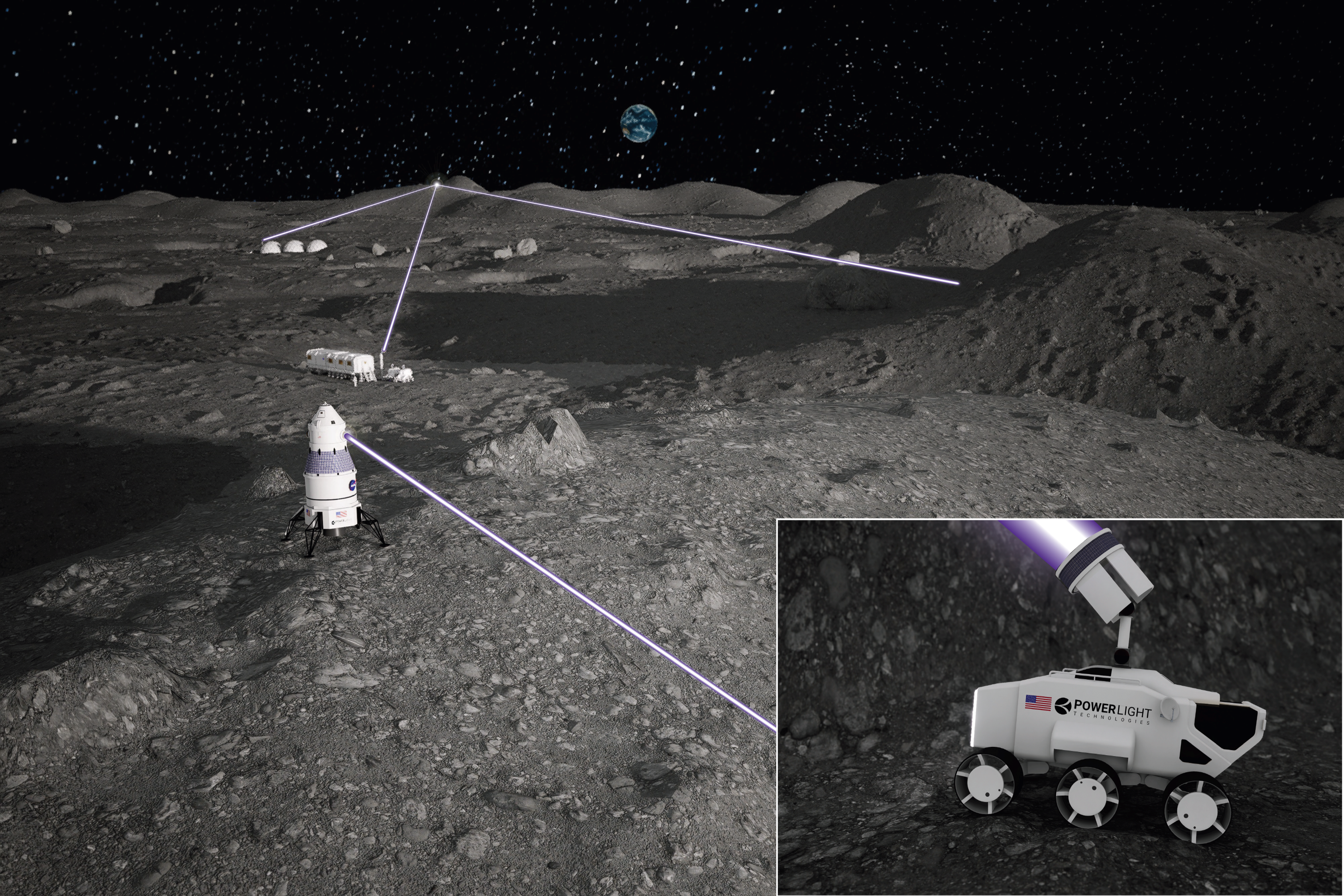
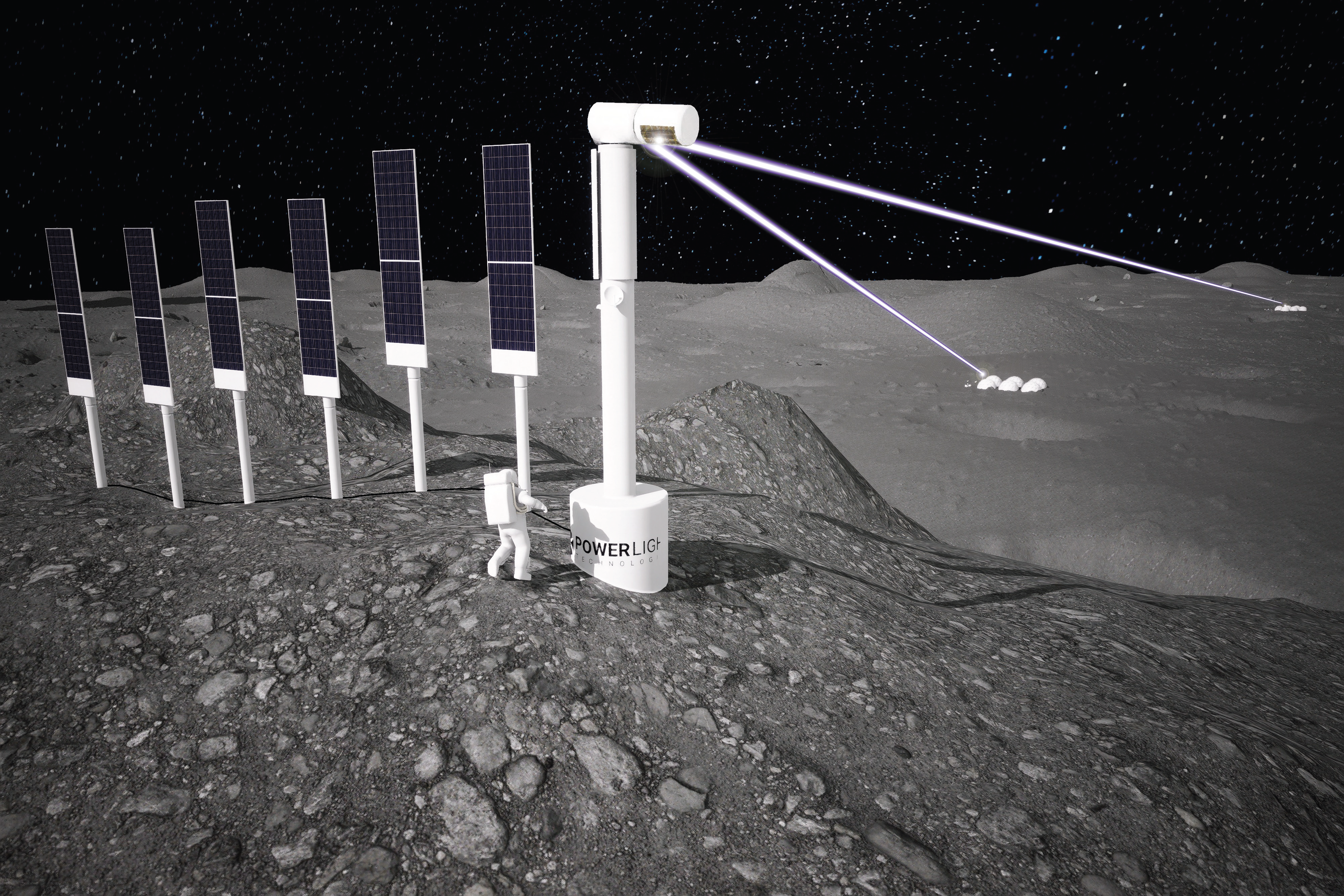
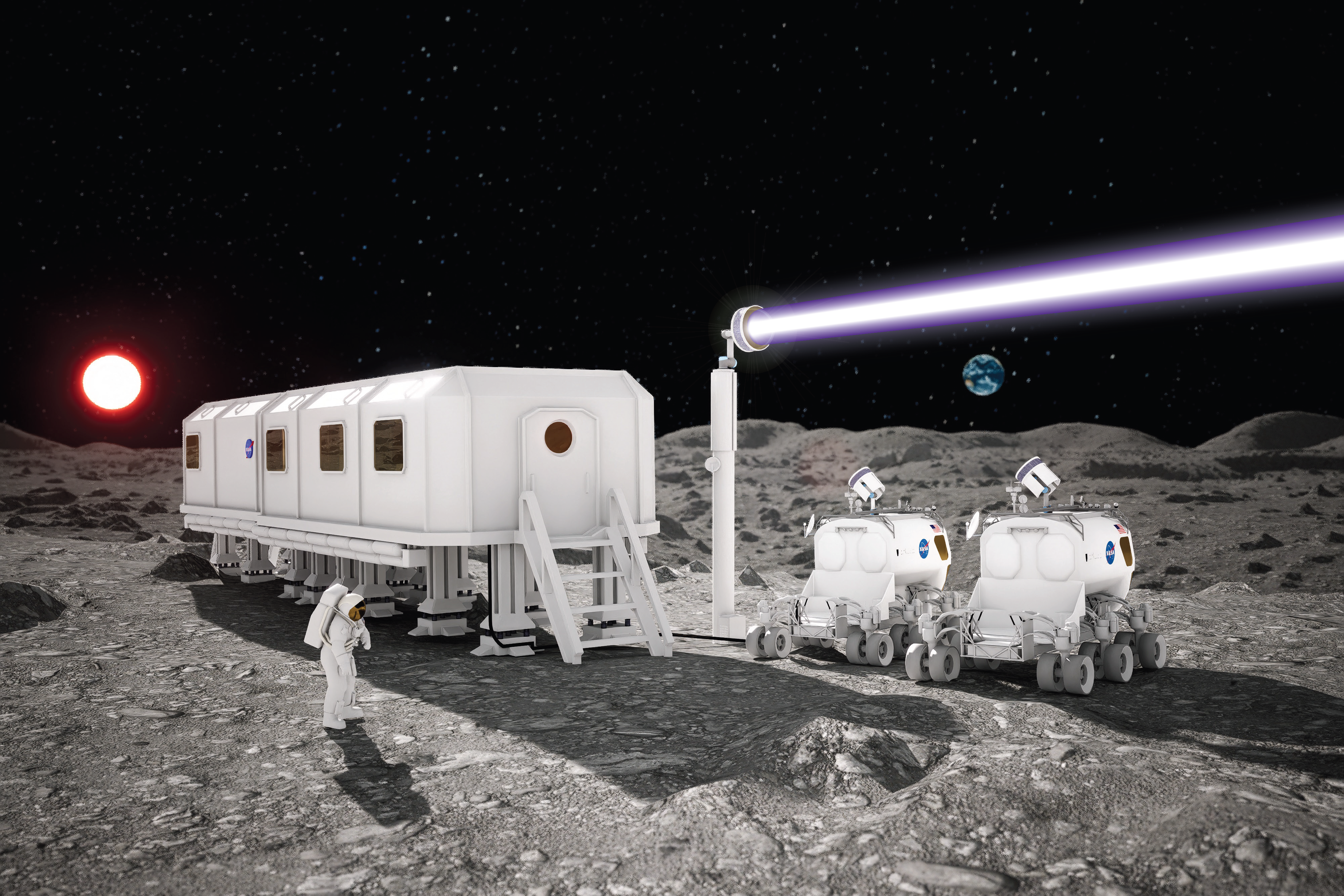
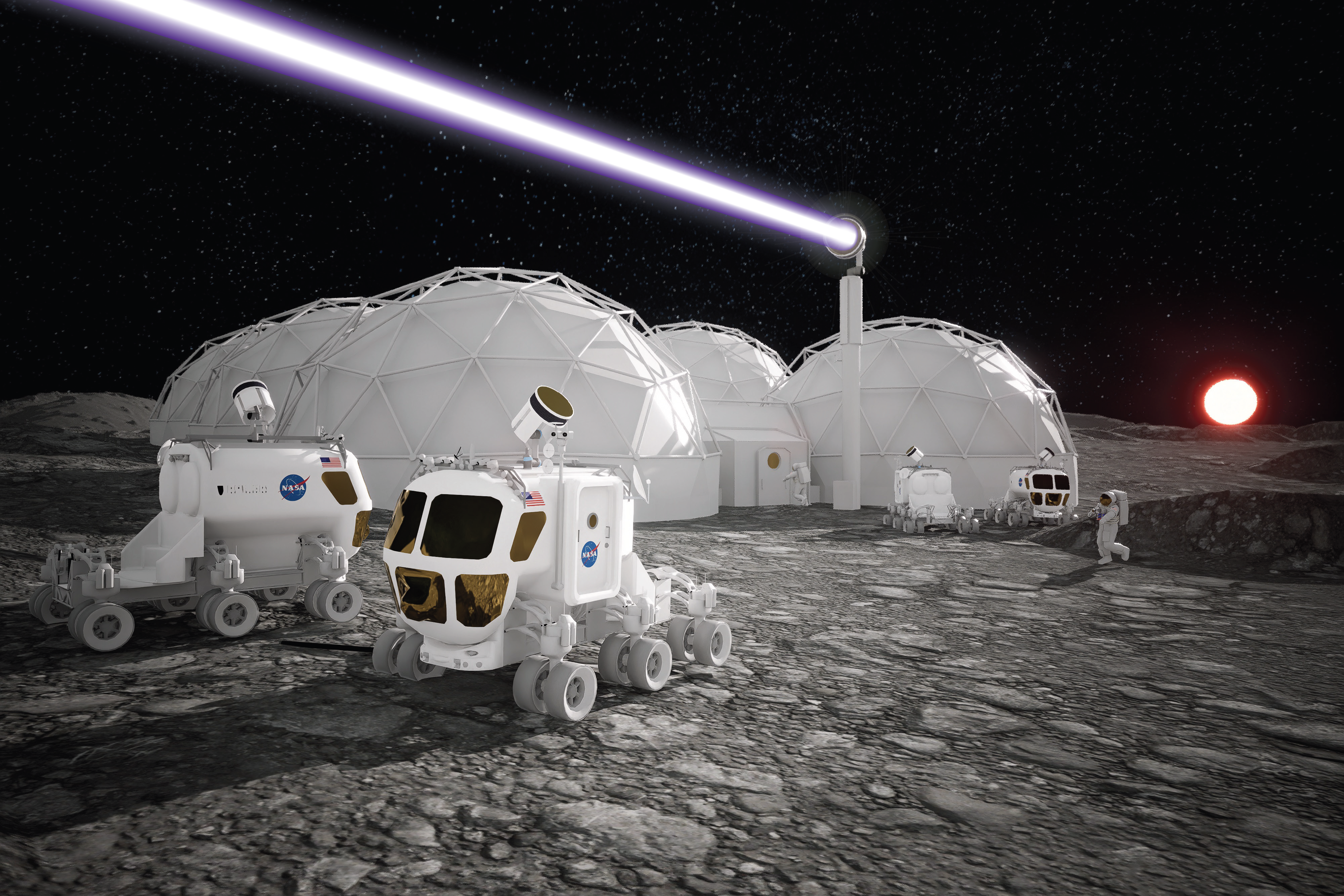
PowerLight is building a lightweight, flexible, standardized way to distribute energy that liberates lunar loads from the singular reliance on heavy cables and batteries. Space missions envision lunar operations as critical to future energy and resource needs. Large amounts of power are needed for habitats, mining, and in-situ resource utilization. Sunlight isn’t consistent (long dark periods), and batteries that operate at freezing temperatures deplete too quickly, and as a result, need frequent recharging. Activities will require flexible power distributed from multiple sources (solar, nuclear, etc…) from both the surface and in orbit. Weight-to-power-delivered ratio is biggest hurdle with delivery and deployment of power solutions.
The space industry is undergoing vast transformation as the private sector and government agencies race to enable new technological capability and it is forecasted that the global space sector will exceed $1 trillion USD by 2040. Private sector funding in space-related companies topped $10 billion in 2021, with ~ 15% directed to lunar and beyond initiatives. In 2023, $4.8 billion was invested into the space tech industry by the end of Q3, with growth-stage investment activity increasing. DARPA aims to develop advancements in National Security technology, working closely with 14 companies as part of its 10-Year Lunar Architecture (LunA-10) Capability Study. This study is meant to make significant progress in the development of future lunar habitats, the agency says. Additionally, NASA’s Artemis program plans to land humans on the moon by 2026 and establish a sustainable presence by the end of the decade, catalyzing the commercialization of the moon.