
Technology
Power, delivered anywhere.
PowerLight has spent fifteen years building and proving the technology platform for optical power beaming — converting electricity into laser light, transmitting it safely over distance, and recovering it as usable power on the other end. The result is a validated, multi-generation capability that operates across every domain where conventional power infrastructure can’t reach.
How power beaming works
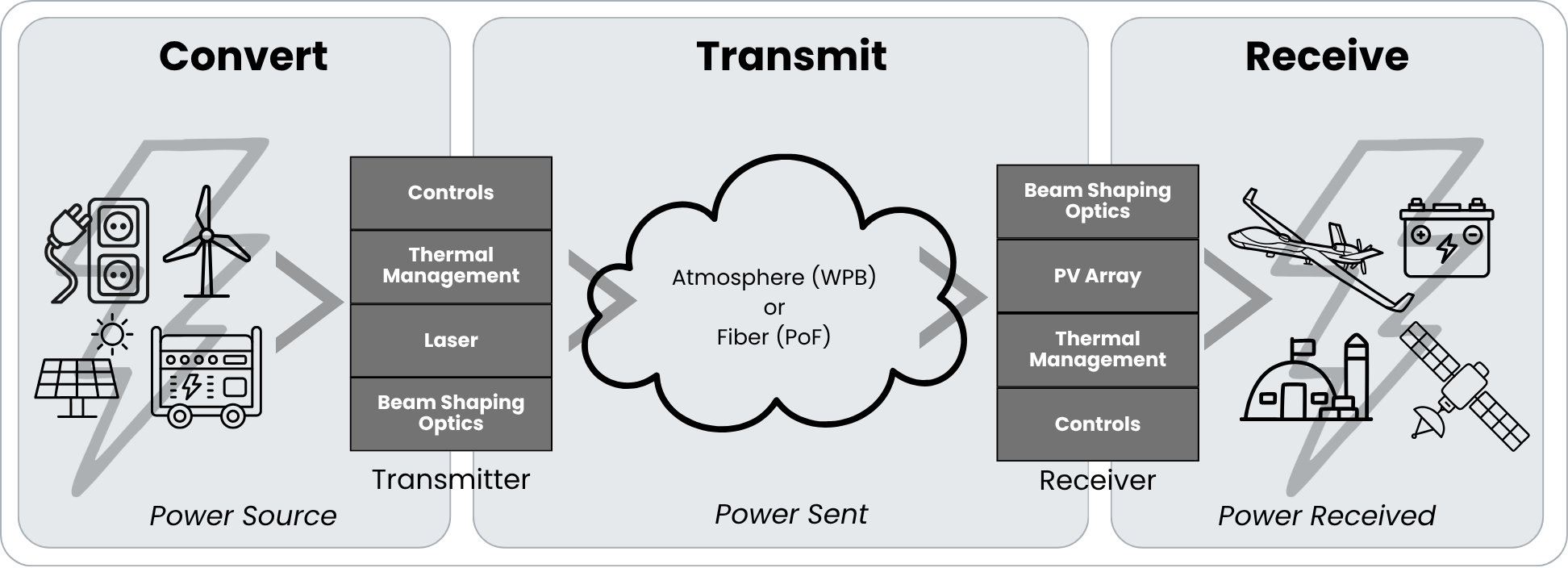
Optical power beaming converts electricity into a precisely shaped beam of laser light, transmits it through air, space, fiber, or water, and converts it back into electricity at the receiver. The beam travels at the speed of light, carries no RF signature, and can cross distances and environments where wire is impractical, cost-prohibitive, or operationally impossible.
Two delivery modes
PowerLight’s power beaming systems are comprised of two methods: Wireless Power Beaming (WPB) and Power-over-Fiber (PoF). While WPB utilizes invisible lasers for power transmission and PoF transmits power through fiber optic cables, both technologies convert light back into usable electrical power at the destination, offering high-efficiency alternatives to traditional copper wiring.
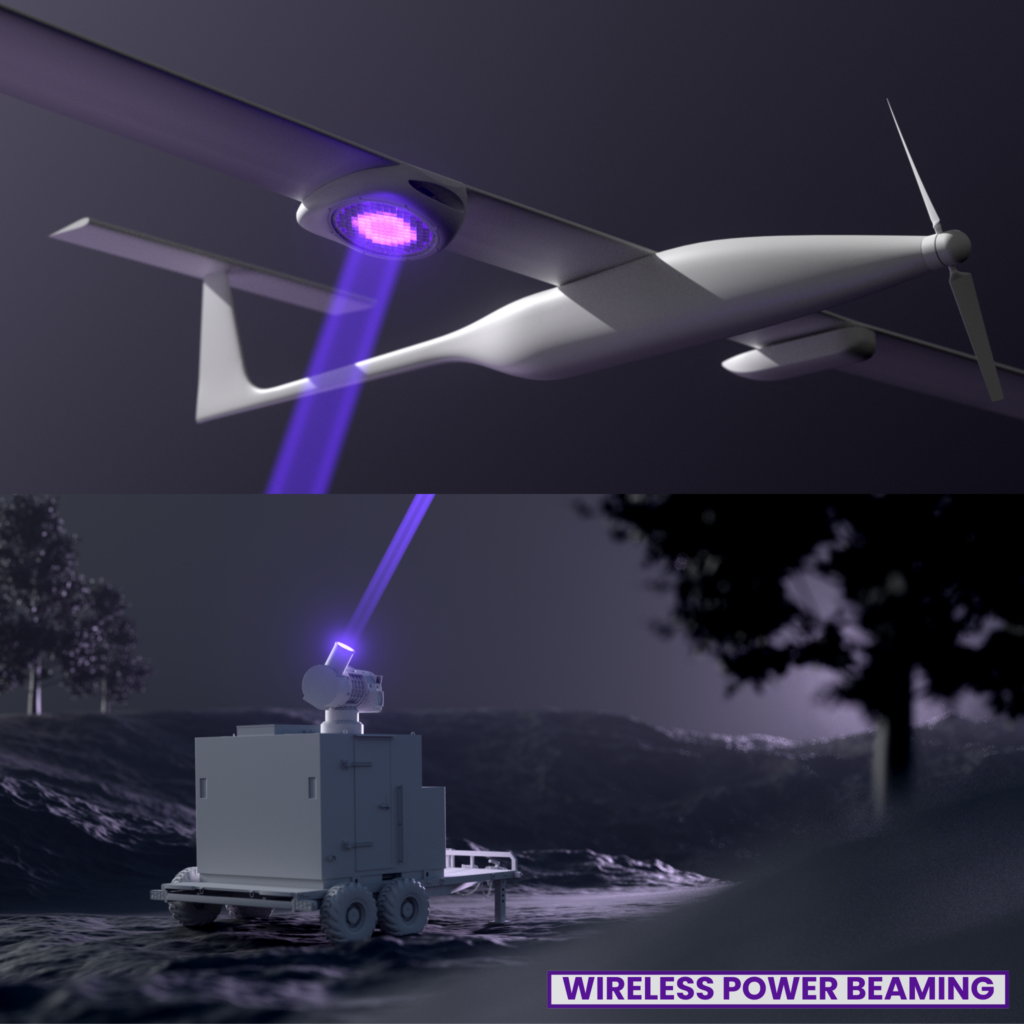
Wireless power beaming (WPB) sends energy through open air or space using a focused laser beam directed at a receiver using proprietary laser power converters. The transmitter tracks moving targets autonomously, adapts the beam to atmospheric conditions in real time, and maintains precise delivery without physical contact.
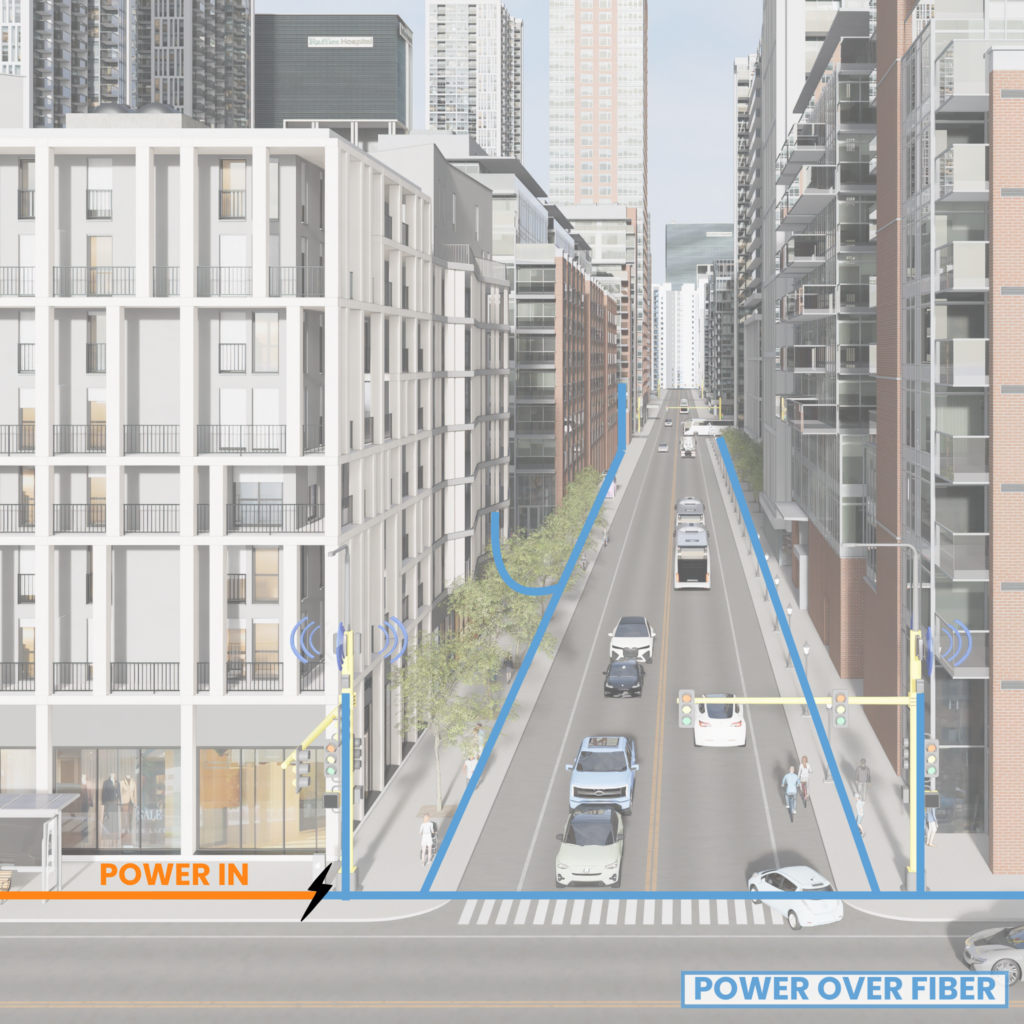
Power-over-Fiber (PoF) sends energy through optical fiber — a single glass strand, or bundle of strands, that carries power and communications simultaneously, with no electromagnetic signature, no corrosion risk, and a fraction of the weight of copper cable.
Where power beaming operates
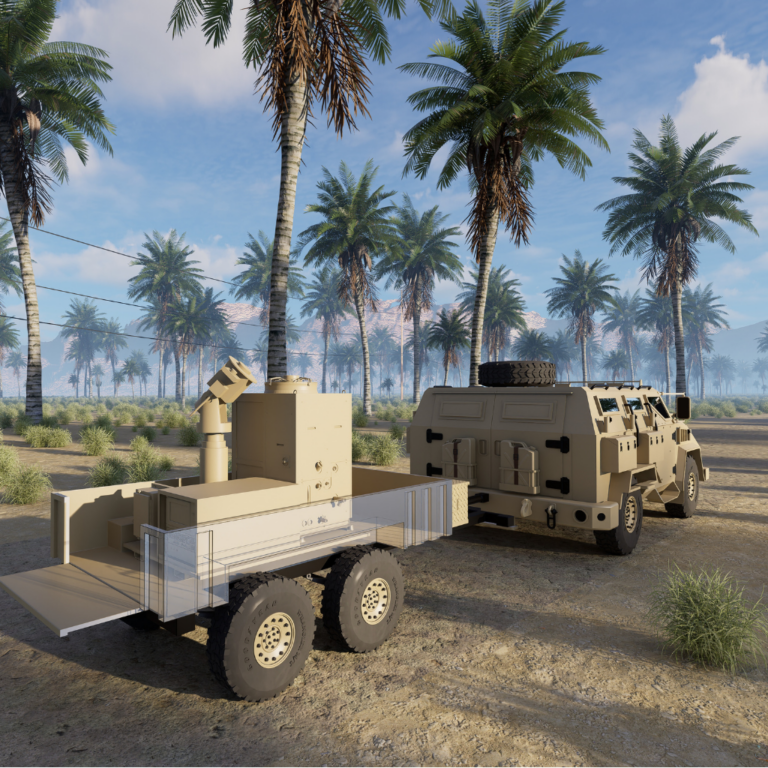
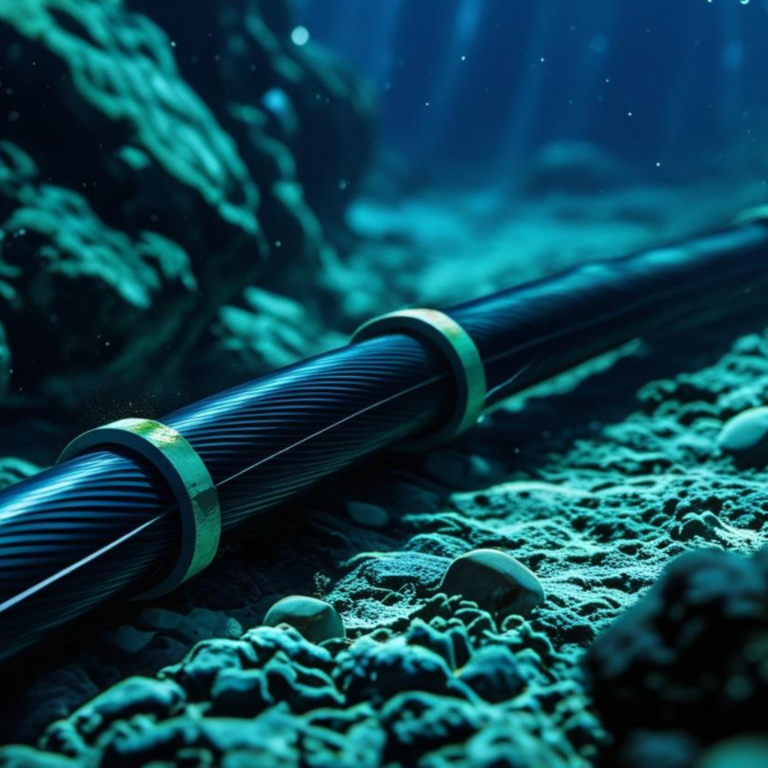
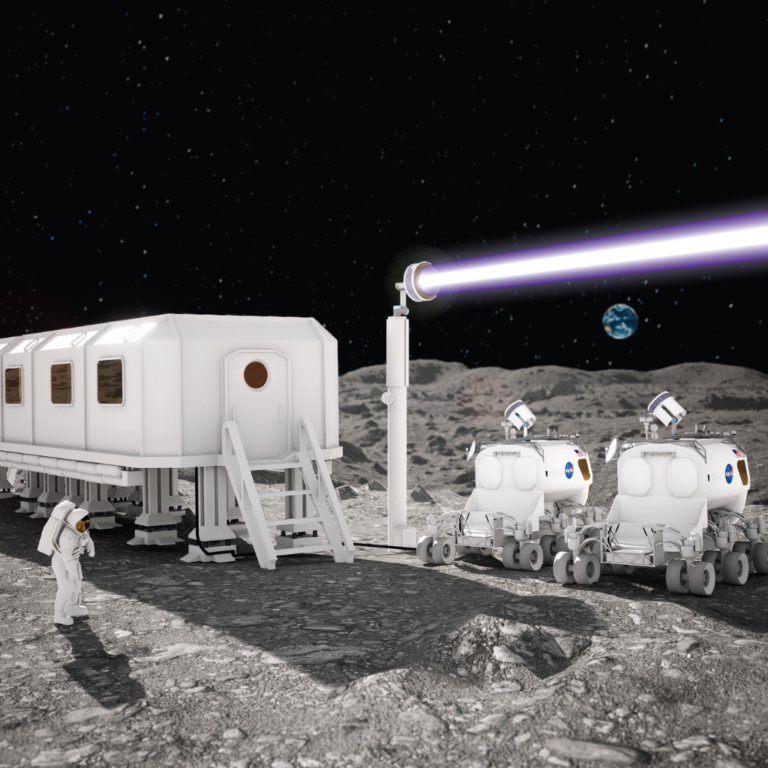
PowerLight’s platform is designed and validated across multiple domains:
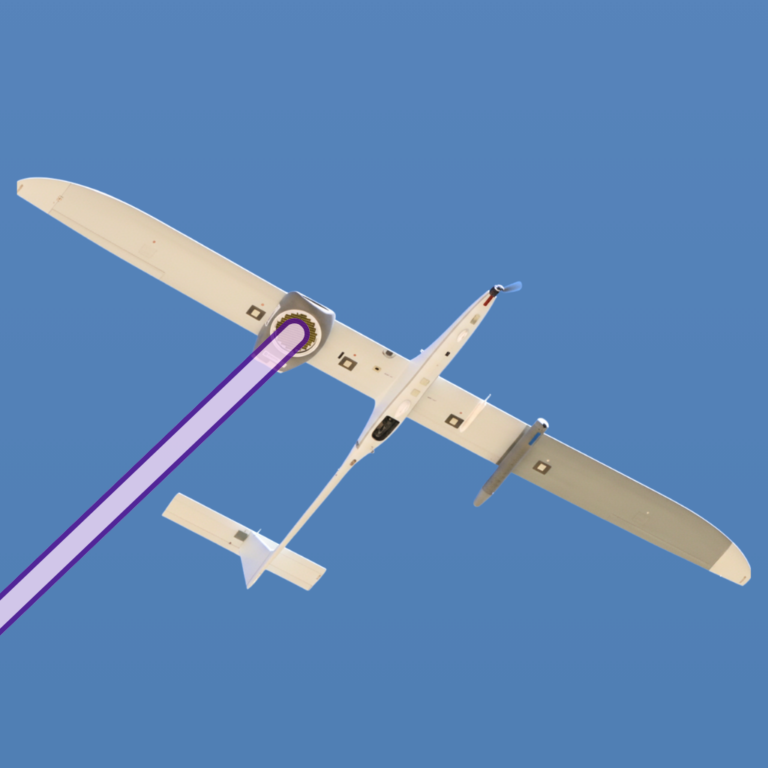
Air — Wireless power beaming to unmanned aerial systems (UAS) in flight, providing persistent power delivery without requiring the aircraft to land, refuel, or swap batteries. PowerLight is actively developing and testing power beaming systems for fixed-wing Group 2 UAS under programs sponsored by U.S. Central Command.
Ground — Power delivery to remote sensors, forward operating bases, and mobile ground sites where grid infrastructure is unavailable and generator logistics create cost and risk.
Sea & undersea — Power-over-Fiber delivery to tethered ROVs and autonomous undersea vehicles, eliminating the weight, corrosion risk, and RF signature of copper-based power cables. PowerLight has demonstrated PoF power delivery to submersible platforms.
Space & lunar — Power beaming architecture for lunar surface power distribution, satellite power delivery, and space-based relay systems. PowerLight was an active partner in DARPA’s LunA-10 program alongside Blue Origin, developing power beaming solutions for sustained lunar operations.
Built on demonstrated capability
PowerLight is a solutions company. Every domain application builds on a generation-by-generation technology foundation that has been tested, government-validated, and demonstrated under real operating conditions over more than fifteen years.
PowerLight’s technology has received validation from NASA, the Department of Defense, DARPA, the U.S. Naval Research Laboratory, and multiple commercial partners. PowerLight has set three world records for wireless power transmission over laser and has been selected for numerous government programs requiring rigorous independent technical assessment.
Safety is not a constraint. It's a core capability.
Operating high-power lasers in open, dynamic, and contested environments requires a safety architecture as sophisticated as the power delivery system itself. PowerLight’s safety system is patented, multi-layered, end-to-end, and has been approved by multiple government and regulatory bodies for real-world operational use.
The challenge
Power beaming at kilowatt class levels in open environments — over active airspace, in proximity to personnel, or in deep-sea installations — cannot rely on the passive containment strategies that apply to industrial laser systems. Every deployment environment is dynamic. Conditions change. Equipment moves. Other actors enter the space.
Building a safety system that works reliably across these conditions, and that earns the trust of regulators and program sponsors required to operate in them, is one of the most technically demanding aspects of PowerLight’s development work — and one of its most important competitive differentiators.
PowerLight's approach
PowerLight’s safety system is end-to-end and autonomous. It operates continuously from the moment the transmitter is initialized to the moment the beam is shut down, requiring no manual monitoring or intervention to maintain safe operation.
Aerial power beaming introduces several unique and valuable solutions:
- Autonomous cooperative target capture and tracking
- Camera sensors & tuned beacon provide position feedback
- Multi-layered, closed loop control ensures beam-on-target in dynamic operating environment
- Control system adapts to motion and vibration at both transmitter and receiver
- Integrated bi-directional RF-free optical communications
The system has been approved for operation in:
- Active military airspace, including operations coordinated with U.S. Air Force and CENTCOM airspace management
- Undersea environments in coordination with applicable safety standards
- Ground-adjacent installations validated by the FBI, U.S. Army, and other government agencies
PowerLight’s safety architecture is protected by multiple issued patents and represents a foundational component of the company’s intellectual property portfolio.